

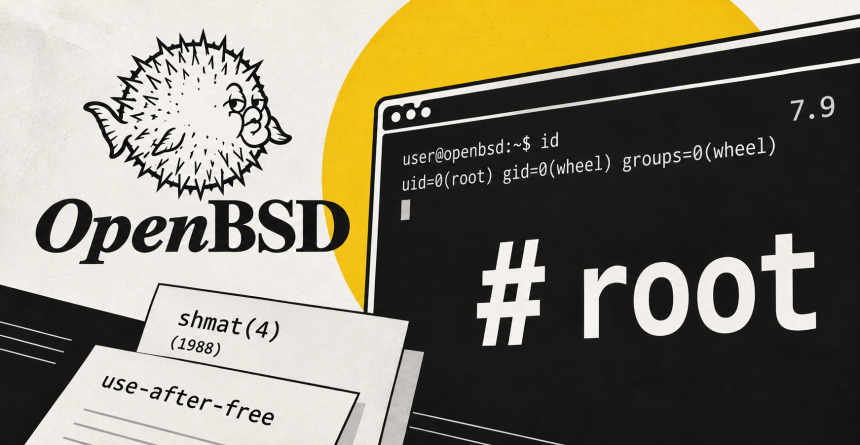
An OpenBSD root exploit has demonstrated how a decades-old shared-memory bug can combine with another kernel flaw to give a local attacker full system privileges. Security researchers at Calif published their findings on October 16, 2026, after fixes became available.
The research, titled Big Fish, shows that the exploit worked despite several enabled security protections. For administrators, the immediate priority is checking that the affected systems have received the relevant OpenBSD updates.
What the OpenBSD root exploit means
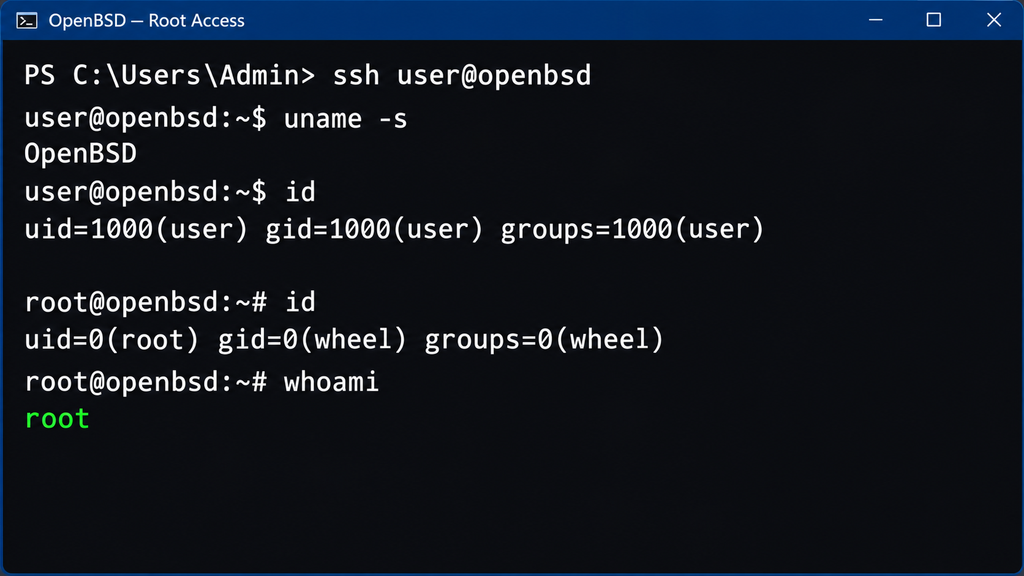
This is a local privilege escalation issue. The demonstrated attack starts with code running on the affected computer and escalates its privileges to root. It does not, by itself, establish a way for an unauthenticated attacker to compromise a server remotely.
That distinction matters when assessing exposure. On a shared machine, a compromised account or application could provide an attacker with an initial foothold. A successful privilege escalation would then undermine the boundaries intended to contain that access.
Calif demonstrated the chain on OpenBSD, while The Hacker News identifies the tested release as OpenBSD 7.9.
How an old counter became a security problem
The research traces the shared-memory issue to a signed 16-bit attachment counter inherited from historical BSD code. Its maximum positive value is 32,767. Under the conditions created by the researchers, the counter overflowed and became negative.
Incorrect accounting could then contribute to memory being released while it was still in use. Combined with a separate kernel memory-corruption flaw, this enabled the researchers to reach a root shell.
Calif also reported bypassing KARL, SMAP, and SMEP without needing a separate information-disclosure vulnerability. Predictable kernel allocations were an important part of the demonstrated attack.
Which OpenBSD updates address the flaws?
OpenBSD’s official 7.9 errata lists two relevant fixes:
| Update | Release date | Official description |
| 018 | September 14, 2026 | Prevents an integer overflow in shared-memory attachment handling |
| 026 | September 30, 2026 | Fixes a reference-counting bug that could cause kernel use-after-free |
Both entries apply to all architectures. However, the availability of binary patches depends on the platform. OpenBSD lists full binary updates for amd64, i386, and arm64, with source patches available through its errata page.
How to check and install OpenBSD patches
On an official release supported by the binary patch service, check available updates with:
syspatch -c
Apply missing patches from a root shell:
syspatch
Review installed patches with:
syspatch -l
The utility downloads and verifies binary patches before installation. Follow its output and any restart instructions so the updated components take effect. Systems maintained through source builds should follow the corresponding official patch instructions.
Why administrators should review every erratum
One notable detail is that update 018 was classified as a reliability fix, while 026 was classified as a security fix. This case illustrates why reviewing only updates labelled “security” can leave important gaps.
For an affected installation, check the complete patch history rather than assuming a recent update covered everything. The practical response is to install applicable fixes, verify the result, and keep the system’s maintenance records current.